
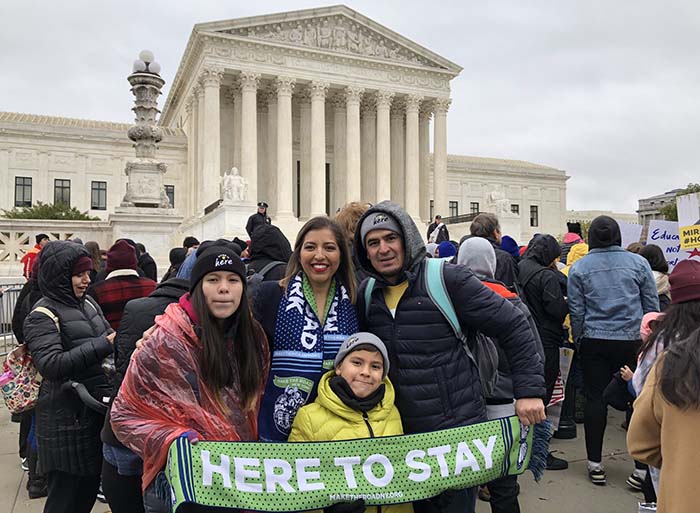
Eliana Fernández con su familia frente a la Corte Suprema de justicia, en Washington. D.C, minutos después de asistir a los argumentos de la demanda en el alto tribunal. Foto Eliana Fernández.
Por Mónica Quintero
“Las historias de quienes pertenecemos al programa DACA y estamos siendo afectados por esta situación son más poderosas que las estadísticas que publican los medios”, dijo Paula Chirinos.
El 18 de este mes la Corte Suprema le negó a la administración del presidente Trump terminar el programa DACA: Acción Diferida para Llegados en la Infancia. Es decir, menores de 16 años que ingresaron a este país con sus familias, pero sin documentación para quedarse. A estos jóvenes se les conoce como soñadores (Dreamers). En el 2012 el presidente Obama firmó la orden ejecutiva DACA para proteger a los llamados soñadores, alrededor de 700 mil en todo el país.
A los 17 años, Chirinos se enteró por intermedio de sus padres que hacía parte del programa DACA. Estaba solicitando ingreso a la universidad. “Por mucho tiempo pensé que era como muchos estudiantes, yo crecí con ellos, fui a las mismas escuelas y nunca supe que yo tenía menos oportunidades por mi estatus migratorio”, dijo Chirinos.
Chirinos llegó a Estados Unidos desde Perú cuando tenía tres años. Ingresó al país legalmente con una visa de turista y se quedó en New York con sus padres.
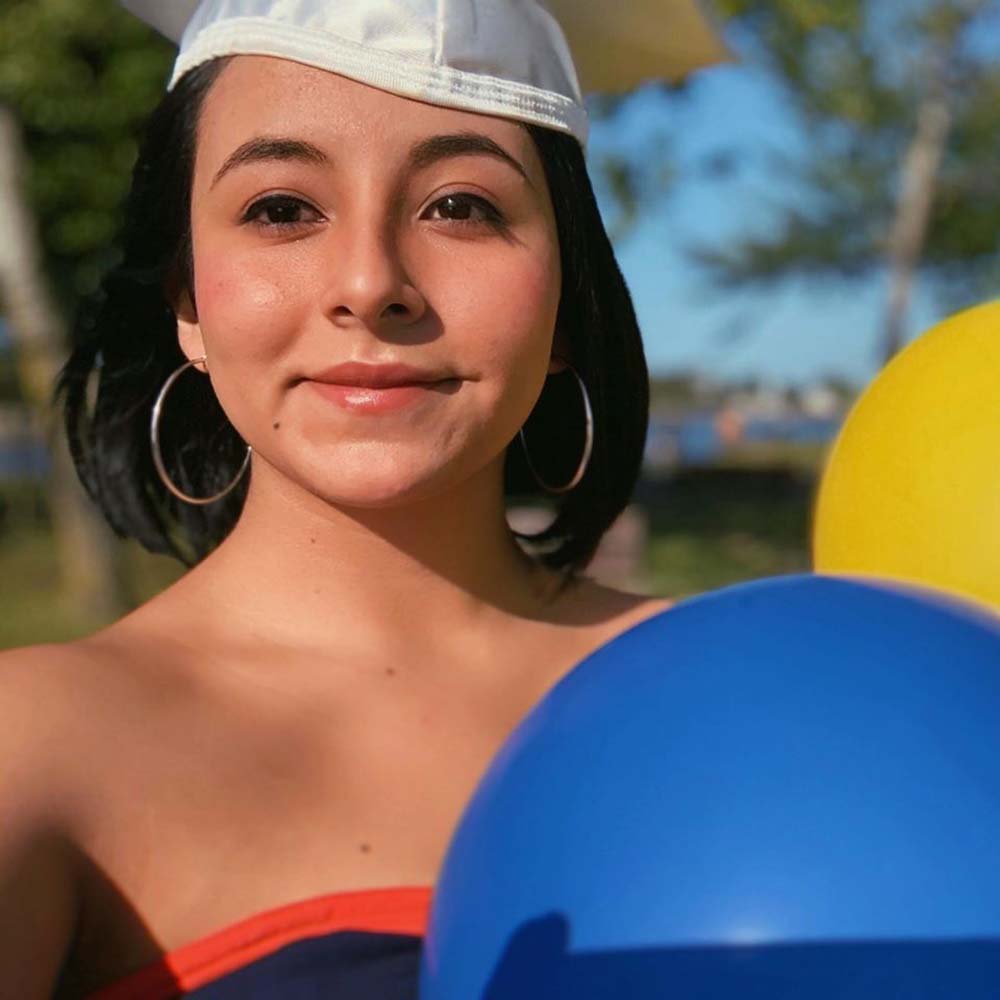
Paula Chirinos, el día de su graduación en Hofstra University como licenciada en Relaciones Públicas y Estudios Globales con especialización en Marketing, Geografía y Participación Cívica. Foto Paula Chirinos.
“Mi mamá fue la que tomó la decisión. Ella quiso ir a la universidad, pero no tuvo el apoyo de sus padres, entonces dijo, ‘yo quiero que mis hijos tenga un futuro diferente’”, añadió Chirinos reconociendo el gran esfuerzo de sus padres.
“Antes de la pandemia, mi mamá trabajaba cuidando niños y limpiando casas y mi papá como cocinero”, dijo Chirinos. “Mi hermano y yo tenemos un Bachelor´s Degree y ya estamos en una posición en donde nosotros podemos ser independientes financieramente”
En el 2016 Chirinos terminó la escuela secundaria, llenó varias solicitudes para poder hacer una carrera profesional, pero su estatus limitó sus oportunidades.. “Cuando eres DACA tienes que luchar cuatro veces más que otras personas”, dijo Chirinos.
Hofstra University fue la única que le ofreció becas de estudio para que cumpliera el sueño de ayudarle a sus padres y ser profesional. “Por muchos años tuve que esconder esta parte de mi identidad. En la universidad aprendí que tengo derecho a manifestar y obtener información para compartirla”, dijo Chirinos.
En noviembre del 2019, Chirinos conoció a la otra soñadora Eliana Fernández, líder organizadora en Make The Road y una de las demandantes en el caso que estudió la Corte Suprema de Justicia.
“Hay muchos jóvenes como Paula por quienes también luchamos, porque hasta ahora están forjando su futuro y no merecen que les corten las alas”, dijo Fernández, quien llegó a este país cuando tenía 14 años. Sus dos hijos le dieron la fuerza para poner su nombre en la demanda.
“Celebro la decisión de la corte, pero soy muy consciente de la situación”, dijo Fernández. Trump todavía puede buscar la manera de terminar con DACA.
Para Chirinos y Fernández la lucha sigue en dos frentes: informar a la comunidad e impulsar el voto para elegir candidatos que defiendan a los inmigrantes.
Kirsten Gillibrand, senadora demócrata por Nueva York dijo: “El fallo es una victoria para los soñadores, sus familias y para todos los estadounidenses que creen en la compasión y responsabilidad humanitaria. Estos jóvenes no dejan envejecer nuestra nación porque son empresarios, trabajadores de salud, militares y mucho más. Y ahora van camino a la ciudadanía”.
Para solicitar información y ayuda de DACA en la ciudad de Nueva York, se puede llamar a Action NYC al teléfono 1-800-354-0365.
English version:
DACA Opens the Way for Citizenship
By Mónica Quintero
“The stories of those who belong to the DACA program and are being affected by this situation are more powerful than the statistics published by the media,” said Paula Chirinos.
On June 18th, the Supreme Court ruled that the Trump administration may not put an end to the DACA program, or the Deferred Action for Early Arrivals, which protects young immigrants from deportation. That is, children under 16 who entered this country with their families, but without the proper documentation to stay. These young people are known as “Dreamers.” In 2012, President Obama signed the DACA executive order to protect the so-called dreamers, around 700-thousand across the country
At 17, Chirinos learned through her parents that they were part of the DACA program while she was applying to college. “For a long time, I thought I was like many students, I grew up with them, I went to the same schools and I never knew that I had fewer opportunities because of my immigration status,” said Chirinos.
Chirinos came to the United States from Peru when she was three years old. She entered the country legally on a tourist visa and stayed in New York with her parents.
“My mom was the one who made the decision. She wanted to study at a university, but she did not have the support of her parents, so she said, “I want my children to have a different future,” added Chirinos, acknowledging the great effort of her parents.
“Before the pandemic, my mom worked babysitting and house cleaning and my dad worked as a cook,” Chirinos said. “My brother and I have a Bachelor´s Degree and we are already in a position where we can be financially independent”
In 2016, Chirinos finished high school, completing several applications for college, but her immigration status limited her opportunities.
“When you are a DACA recipient, you have to fight four times more than other people,” said Chirinos.
Hofstra University was the only one that offered her the opportunity to study with scholarships to fulfill the dream of helping her parents and becoming a professional. “For many years I had to hide this part of my identity. At the university I learned that I have the right to express myself and obtain information to share it,” said Chirinos.
In November 2019, Chirinos met another dreamer, Eliana Fernández, the lead organizer for Make The Road NY, and one of the plaintiffs in the case that the Supreme Court ruled on in June.
“There are many young people like Paula for whom we also fight, because until now they are forging their future and they do not deserve to have their wings cut off,” said Fernández, who came to this country when she was 14 years old. Her two sons gave her the strength to put her name on the lawsuit.
“I welcome the court’s decision, but I am very aware of the situation,” said Fernández. Trump can still look for a way to end DACA.
For Chirinos and Fernández, the fight continues on two fronts: informing the community and boosting the vote to choose candidates who defend immigrants.
Kirsten Gillibrand, Democratic Senator from New York, said: “The ruling is a victory for dreamers, their families and all Americans who believe in compassion and human rights. These young people will not let our nation get old, because they are businesspeople, health workers, members of the military and much more. And now they should be on the road to citizenship.”
To request information and help from DACA in New York City, you can call Action NYC at 1-800-354-0365.

