

Towana Looney received a kidney from a pig and is health at home. Photo courtesy
Three months after her breakthrough surgery at NYU Langone Health, Towana Looney, the longest-living recipient of a genetically engineered pig kidney, is headed back home to Alabama.
“I feel blessed,” said the 53-year-old grandmother. “I’m so grateful to be alive and thankful to have received this incredible gift. It couldn’t have happened without God and the amazing team of doctors, nurses, and researchers who have been by my side.”
During the November 25, 2024, transplant surgery at NYU Langone’s Kimmel Pavilion, Looney received a kidney from a 10-gene-edited pig, becoming only the third person in the world to receive a pig kidney. She has since been under the close care and observation of the NYU Langone Transplant Institute team while living in an apartment in Manhattan. She returned south Tuesday, February 25, but will continue to be monitored by the NYU Langone team, returning monthly for checkups.
“Towana’s recovery from a long history of kidney failure and dialysis treatment has been nothing short of remarkable,” said Robert Montgomery, MD, DPhil, who led the procedure and who is the H. Leon Pachter, MD, Professor of Surgery; chair of the NYU Grossman School of Medicine Department of Surgery; and director of the NYU Langone Transplant Institute. “We are committed to giving her the best possible chance at life and providing ongoing care from our world-class team of experts. We’re so pleased to see her go back home to her extended family healthy and ready to take on a whole new phase in her long life ahead.
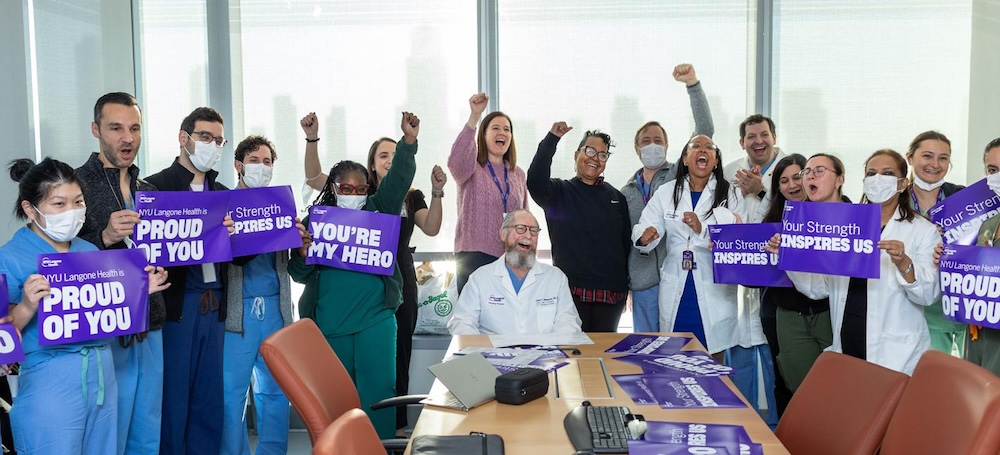
Towana Looney, wearing black and in the center, cheers with the care team at NYU Langone. Her “recovery from a long history of kidney failure and dialysis treatment has been nothing short of remarkable,” said Dr. Robert Montgomery, who led the procedure. Photo NYU Langone staff
Looney’s surgery was the latest in a series of similar procedures known as xenotransplantation, which is the practice of transplanting organs between species. Prior to the xenotransplant, her medical condition was worsening due to eight years of dialysis treatment for end-stage kidney failure. After donating a kidney to her mother earlier in life, a complication during pregnancy led to kidney failure and unusually high levels of harmful antibodies that prevented her from receiving a human transplant.

In Alabama, Looney was originally under the care of Jayme Locke, MD, MPH, a transplant surgeon who led innovations in xenotransplantation while at the University of Alabama at Birmingham. Dr. Locke, who is now a clinical faculty member at NYU Langone, initiated the U.S. Food and Drug Administration (FDA) application for expanded access to receive an experimental treatment, otherwise known as a compassionate use application.

